
HAVET & VANHUFFEL – Association d’avocats
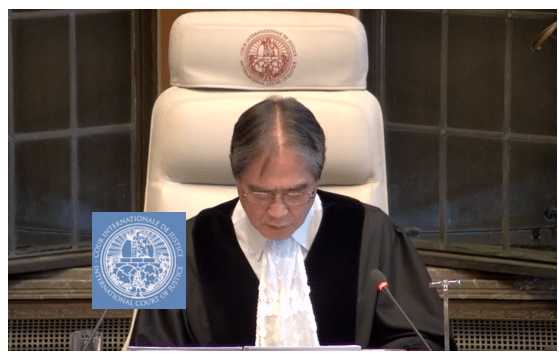
On July 23, 2025, the International Court of Justice, seized by a resolution of the United Nations General Assembly on March 29, 2023 (resolution 77/276), issued, under Article 65 of its Statute, an advisory opinion on the question of international obligations that fall upon States and the consequences related to their non-compliance in the event of harm to the climate system or the environment.
The Court lists a whole series of applicable texts that it considers the most relevant. This primarily includes the United Nations Charter, the United Nations Framework Convention on Climate Change, the Kyoto Protocol, and the Paris Agreement. These are the main texts. It then cites various other relevant treaties, namely the United Nations Convention on the Law of the Sea, the Vienna Convention for the Protection of the Ozone Layer, the Montreal Protocol on Substances that Deplete the Ozone Layer, the Convention on Biological Diversity, and the United Nations Convention to Combat Desertification in Countries Affected by Severe Drought and/or Desertification. It mentions that there are other relevant texts but has limited itself to the most pertinent conventions.
The Court also notes the existence of customary international law that imposes an obligation to prevent environmental damage, which includes obligations of due diligence and collaboration. These obligations of due diligence and collaboration are assessed in concreto for each State based on its specific situation. Finally, it mentions the main treaties relating to human rights, as well as the human rights recognized in customary international law that apply in the context of climate change. For the Court, it follows from these treaties and customary law that States have strict obligations to protect the climate system. These obligations bind States for present generations as well as future generations.
A state that violates its obligations concerning climate change commits an internationally unlawful act that engages its responsibility, which generates for the responsible state a duty to fulfill the obligation that it has failed to meet. Among the possible consequences, the International Court of Justice cites the cessation of unlawful actions or omissions, if they continue, the provision of assurances and guarantees of non-repetition of unlawful acts or omissions, but also the granting of full reparation to the injured states in the form of restitution, compensation, and satisfaction. For the Court, to engage responsibility, it is necessary that there exists a causal link that includes the demonstration of two elements:
– the demonstration of attribution of the violation of one of the rules by one state, and
– the attribution of damages caused by climate change to a state or group of states that seeks reparation.
The right of individuals to invoke the legal responsibility of States, or to file a complaint involving damages resulting from climate change, depends on the relevant primary obligations of States.
This opinion, although non-binding, should influence climate jurisprudence as well as future legislation.
To access the notice, follow the link: https://www.icj-cij.org/sites/default/files/case-related/187/187-20250723-adv-01-00-en.pdf and for more explanations: https://www.icj-cij.org/index.php/fr/node/205614.